






Identity access management: the quiet architecture of trust on the frontline
Published:
In The Principles of Scientific Management Frederick Winslow Taylor stated a central conviction: that the greatest waste in industrial work is not of materials, but of human effort lost to friction, ambiguity, and delay. While he was writing about shovels and factory floors, the sentence sits surprisingly well in a modern warehouse, a hospital corridor, or a logistics hub in the early morning hours. Every shift begins with a small social contract: the worker turns up, and the company, in return, grants them entry into the systems that allow them to do their job. When that contract works, it goes unnoticed. When it fails, because of a forgotten password, a revoked badge or a missing role assignment, the friction becomes very real, and it holds up the entire operation.
That quiet contract is what we now call identity access management. It is the discipline that decides who you are at work, what you may touch, and which doors open the moment your shift begins. If every employee carried an invisible set of keys shaped by their role, their site, and their history with the company, would your organization actually know which keys it has handed out, which ones it has forgotten to take back, and whether IAM has quietly become the most honest form of trust you offer your people?
 Dr. Franzi Finkenstein
Key Takeaways
Identity access management has shifted from an IT discipline into a workforce experience strategy. The way employees prove who they are now shapes how engaged, productive, and trusted they feel from day one.
For frontline workers, IAM is the most underestimated source of friction in the working day. Shared terminals, paper credentials, and manual onboarding processes quietly erode hours, security, and morale across multi-site operations.
AI changes the stakes entirely. As autonomous agents and human users share the same enterprise network, robust identity and access management becomes the single most important control layer a company has — and the foundation on which every future AI workflow will stand or fall.
A case study: how Bridgestone gave 5,000 factory workers a real digital identity
For decades, Bridgestone's factory floors in the EMEA region ran on paper. Machine status was reported on clipboards. Shift supervisors walked the length of production halls collecting handwritten notes. The company's office workers had digital identities, mailboxes, and modern collaboration tools. The 5,000 people who actually made the tyres did not.
The problem was structural. Factory environments punish electronics with dust, vibration, and constant shift-handover. Devices had to be shared. Complex password policies, mandated for security, collided head-on with workers who were multitasking under time pressure and could not afford the friction. Passwords, in the company's own words, were frustrating.
In partnership with Microsoft and the integrator Algoritmia, Bridgestone gave every frontline worker a unique digital identity through Microsoft Entra ID, paired with FIDO2 security keys for passwordless authentication on ruggedised tablets. The entire estate is managed centrally with Microsoft Intune. The deployment took less than six months.
The outcome is concrete. Around 5,000 frontline workers now use 826 tablet devices every day, on every shift. Machine status reporting that once lived on paper is digital and immediate. Workers can finally access the same HR and operational systems their office colleagues use. Bridgestone has framed this as the foundation of its "Factory 4.0" vision, but the human story is simpler. People who had been digitally invisible to their employer are now first-class citizens of the company's enterprise network.
This is the real face of identity access management in 2026. Not a backstage IT topic. It is a daily, embodied workforce reality.
What is identity access management, honestly defined
Identity access management, often shortened to access management IAM, is the framework of policies, processes, and technologies a company uses to make sure the right people, and only the right people, have the right access to the right resources at the right time. That definition has been written a thousand times. What matters more is what it actually does on a Monday morning.
An IAM system answers three questions, continuously, for every worker: Who are you? What are you allowed to do? Should you still be allowed to do it? It governs digital identities, the verifiable record of every human and non-human entity in your enterprise network. It enforces access control, the rules that decide which digital resources and network resources each identity may reach. And it keeps a record for auditors, for regulators, for the inevitable post-incident review.
Modern IAM solutions sit on a few foundational pillars: user authentication (proving identity through one or more authentication factors), authorisation (granting access permissions and access privileges that match the role), administration (managing user accounts and privileged accounts across multiple systems), and audit (tracking who did what, when, and from where). Increasingly, they also handle identity governance, i.e., the strategic layer that makes sure access rights stay aligned with risk, compliance, and business reality over time.
For a frontline workforce, this is not an abstract reality. It is the difference between a nurse opening a patient record without a sticky-note password, a shift supervisor approving overtime in two taps, and a retail associate getting their first payslip in week one rather than week six.
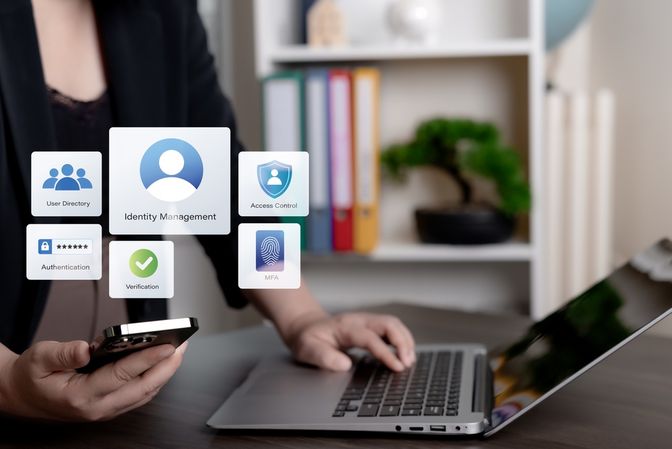
Keeping identities safe with the right IAM tools.
Why access management has become a people strategy, not an IT strategy
For most of the last two decades, IAM was a discipline owned almost exclusively by IT. It lived in the same architectural conversation as firewalls, on premises servers, and Microsoft Active Directory. The CIO cared. Almost no one else did.
That has changed, and the change is structural rather than cosmetic.
The first reason is regulatory weight. The general data protection regulation in Europe, the health insurance portability and accountability framework in the US, sector-specific rules in finance, healthcare, and critical infrastructure, all of them now make access management software a board-level concern. A breach traceable to weak access control mechanisms or undocumented privileged access management is a reputational event.
The second reason is the workforce itself. According to the Gallup State of the Global Workplace 2024 report, only 23 per cent of employees worldwide describe themselves as engaged at work, and the figure is consistently lower in deskless industries. When you ask disengaged frontline workers what makes their day hard, the answer is rarely "the work itself." It is the friction around the work and a meaningful share of that friction sits in identity. Forgotten passwords. Devices they can't log into. Systems that refuse to recognize them on the third shared terminal of the morning.
The third reason is AI. We will return to this.
What unites these three forces is a quiet repositioning: identity and access management is no longer about keeping people out. It is about letting the right people in, faster, with less friction, and with more dignity. That is a workforce experience question. It is also why HR and IT now sit on the same side of the table when this topic comes up.
The anatomy of a modern access management system
Let us be concrete. A modern identity management system in 2026 typically includes the following components, each of which deserves more than the buzzword treatment.
Authentication and multi-factor authentication
The act of proving who you are. The gold standard today is multi factor authentication (mfa), combining something you know (a password), something you have (a device or token), and something you are (a biometric signal). For frontline staff, biometric and device-bound methods are often the only practical option, because shared corporate laptops and personal email addresses simply do not exist in their working day.
Authorisation through role and attribute models
Once a user has logged in, the system decides what they may touch. Role based access control assigns permissions based on job function. Attribute based access control goes further, factoring in context such as location, device, shift, or risk score. The more dynamic the workforce, the more compelling attribute-based models become.
Single Sign On and federated identity management
Single sign on lets a verified user move between multiple systems without re-authenticating. Federated identity management extends that trust across organizational or vendor boundaries, often using protocols like security assertion markup language (SAML), openid connect, or the cross domain identity management standard (SCIM) for user provisioning. The practical result for a worker: one identity provider, one set of login credentials, one experience.
Identity governance and lifecycle management
A good IAM system does not just hand out access. It revokes it, too. Identity governance ensures that access rights are reviewed, recertified, and revoked when someone changes role or leaves. Identity governance tools automate this lifecycle so that no one walks out of the company still holding access privileges they no longer need.
Privileged access management
A specialized subset of iam tools focused on privileged accounts, administrators, system operators, anyone who can change configurations or access sensitive information. Compromise here is catastrophic, which is why privileged access management sits in its own product category and its own threat model.
Identity security and behavior analytics
The newest layer. Identity security uses user behavior analytics and risk scoring to detect anomalies in real time: a login from an unusual location, an unexpected request for sensitive data, an attempt by an unauthorised user to escalate privileges. This is where iam technologies start to overlap with what was historically called security operations.
These components do not function in isolation. They form what analysts increasingly call an identity fabric: a connected mesh of services that verify users identities consistently across multiple user sources, whether those users are internal users, contractors, customers, or, and this is the new part, AI agents.
Why frontline workers are the group IAM was never designed for
Most legacy access management systems were built with one user in mind: the corporate office worker with a company laptop, a corporate email, and a single desk. That archetype represents fewer than 20 per cent of the global workforce. The other 80 per cent, operational employees, shift workers, deskless staff, were a structural afterthought. The result is friction that is not subtle.
A retail associate who shares a terminal with three colleagues cannot easily use a password manager. A construction site supervisor cannot reset a forgotten password through a corporate help desk that only operates during office hours. A logistics worker on a night shift cannot wait three days for IT to provision appropriate access to the route planning tool. User expectations in 2026 are shaped by consumer apps that authenticate in under a second. Enterprise access management has often failed to keep up.
This is why access management solutions designed for the frontline matter so much. They have to assume the worst environment: shared devices, intermittent connectivity, no corporate email, high staff turnover, multilingual workforces, and operational managers who cannot afford to wait. They have to grant access the moment a worker is hired and revoke access the moment they leave. They have to manage user access through a single, mobile-first surface that a 19-year-old new hire and a 58-year-old long-tenured operator both find obvious.
Done well, this is invisible. Done badly, it is the reason people quit.

Reach your operational teams 80% faster and more reliably
Flip's mobile app combines messaging, chat, HR tools, and your knowledge base in one secure application. No additional tools or licenses required.
How Flip turns the quiet contract into something the frontline can feel
As suggested before, identity access management can be considered a quiet social contract. The worker shows up, and the company grants them entry to the systems that let them do the job. Frontline Identity honors that contract on the device a worker already carries. A badge tap, a face, or a short PIN proves who they are, and the doors the article describes open in the same motion, with no sticky-note password and no third shared terminal refusing to recognize them.
The Bridgestone story above shows what is really at stake. For years, the people who actually made the tyres were strangers to the very systems that ran their working lives, present on the factory floor yet absent from the company's digital world. Frontline Identity ends that quiet exclusion.
The holistic tool hands each worker a real place inside the systems their office colleagues take for granted, and it does so without pretending they have a corporate laptop on a desk or a personal mailbox they were never given. Recognition arrives on the device already in their pocket, shaped around the texture of a shift rather than the habits of a head office.
When identity removes friction instead of adding it
Because the article treats IAM as a people strategy rather than an IT chore, every other part of the platform has to earn its keep by stripping friction away from the work itself. The AI Workflows is where that promise becomes tangible. A verified worker approves overtime in two taps or files an incident in under a minute, and each of those actions runs against the access rights Frontline Identity already holds, so nothing asks them to prove who they are a second time.
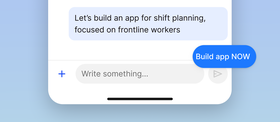
Flip Fusion extends the same logic to the long tail of small, stubborn needs that an IT backlog never reaches. HR or operations describe the role-specific app they want in plain language, and it arrives minutes later, recognized and governed from its very first screen rather than bolted on as an afterthought.
The AI Agent Gateway then lets Ask AI answer a policy question or complete a task inside systems such as Workday on the worker's behalf, always inside that worker's permissions. The third force the article names is AI, and this is where it lands in practice. When agents and people share the same systems, one clean, governed identity per worker is the control layer every future workflow stands on.
How AI is reshaping identity and access management
Here is where the conversation gets genuinely interesting, and where most companies are still underprepared.
For the past forty years, IAM has assumed one thing: that the entity requesting access is a human. Human users had passwords. Authenticated users had sessions. Authorised users triggered actions. The model worked because the population of identities was finite and largely visible.
That assumption is now collapsing.
By the end of 2026, most enterprises will be operating dozens, then hundreds, of AI agents, i.e., software entities that act on behalf of human users to retrieve information, complete workflows, and trigger transactions. Each of these agents needs an identity. Each needs access permissions scoped to only the permissions required for its task. Each needs to be auditable, revocable, and observable. A Gartner forecast published in November 2025 estimates that by 2028, agentic AI will autonomously make at least 15 per cent of day-to-day work decisions in large enterprises, up from effectively zero in 2024.
That is a population explosion in the identity management database. It is also a profound shift in what identity protection means. The traditional perimeter, keep bad people out, let good people in, no longer holds when half the actors on your enterprise network are non-human.
What Forward-Looking Companies Are Doing Differently
The companies thinking clearly about this are doing three things.
First, they are extending strict access controls and granular access controls to AI agents, treating each agent as a first-class identity with its own role, its own scope, and its own audit trail. Second, they are using attribute based access control to apply real-time context, i.e., what the agent is doing, on whose behalf, with what data, rather than relying on static role definitions. Third, they are designing their IAM solutions so that human workers and AI agents can collaborate inside the same workflow, with consistent identity information, consistent governance, and consistent secure access.
For frontline workforces, this is more than a security story. It is the difference between an AI assistant that can actually help a shift supervisor reschedule a team in two seconds, because it has the right identity, the right permissions, and the right context, and one that can only answer questions.
How this looks like on the frontline
Take a manufacturer with 6,000 people across four plants, most of them on the shop floor. Today a new hire waits days for a login, supervisors share a generic password to reach the machine logs, and leavers keep access for weeks after their last shift. With Frontline Identity, every worker gets a single credential the moment HR adds them, opened by a badge tap or a face check at any shared terminal. AI Workflows routes their overtime approvals and incident reports behind that identity, Flip Fusion gives each plant a maintenance-log app built in an afternoon, and Ask AI answers shift and policy questions through the AI Agent Gateway without a manager being interrupted. Access is granted in minutes, revoked the moment someone leaves, and visible to IT throughout. The friction Taylor would have called waste quietly disappears, and identity becomes the thing that lets people work rather than the thing that holds them up.
Compliance, risk, and the hidden cost of doing nothing
It is tempting, in a topic this technical, to treat compliance as a footnote. It is not.
The cost of weak access management software shows up in several places at once. Regulatory fines under the general data protection regulation can reach four per cent of global annual turnover. Breach costs, according to IBM's 2024 Cost of a Data Breach report, average USD 4.88 million globally, with credential-based attacks among the most common entry vectors. Security risk sits on the balance sheet whether or not it is named there.
The hidden costs are arguably worse. Time gets lost to denying access that should have been granted, to granting access resources that should have been denied, recertifying user identities through clunky quarterly reviews, or time gets lost when authorised users cannot request access to a system because the workflow lives in three different tools.
A mature IAM system collapses these costs. It enforces restrict access rules automatically, recertifies access rights continuously, and treats manage identities as a real-time function rather than a quarterly project.
The companies that take this seriously now will be the ones who, two years from now, can confidently say: every human and every AI in our enterprise has exactly the access they need, no more, no less, and we can prove it.
The future belongs to platforms that empower the worker, not just protect the system
A useful test for any identity strategy in 2026 is to ask whose experience it improves. If the answer is "the IT department" or "the audit team," the strategy is incomplete. If the answer is also "the employee on shift right now, whose first interaction with their employer this morning is opening an app," then the strategy is in the right shape.
This is the deeper argument behind Flip's bet on identity. A platform that already sits in the worker's hand, that already understands their role, their schedule, and their location, is structurally better placed to control access, manage access, and protect sensitive information than a stack of systems bolted on from a corporate office that the worker has never visited. Identity management at the edge of the organization cannot be retrofitted from the center. It has to be purpose-built for the place where the work actually happens.
When AI joins that workforce, and it will, faster than most companies are ready for, the platforms that have already solved identity for the frontline will have a decisive head start. The rest will spend the next three years trying to bolt agent identity onto an architecture that was never designed for it.
Conclusion: identity is the quiet decision that shapes everything else
Taylor argued that the greatest loss in any organization is not in its machines or its materials, but in the wasted effort that no one ever measures. A century later, the workplace version of that argument is being settled in something as prosaic as how a warehouse associate logs into a shift planner at 5:47 a.m. The friction is small. The cost, multiplied across every worker, every shift, every site, is not.
Identity access management is no longer a backstage IT topic. It is the architecture of trust between a company and the people, and, soon, the agents, who keep it running. The organizations that treat it as a workforce experience question, not a compliance checkbox, will be the ones who attract, retain, and empower the workforce of the next decade. The rest will keep losing 47 minutes a shift, one forgotten password at a time.
The future of work is not about more tools. It is about fewer doors, opened faster, by the right hand, at the right moment.
Sources: Gallup, State of the Global Workplace: 2024 Report; IBM Security, Cost of a Data Breach Report 2024; Microsoft, Bridgestone helps frontline workers achieve more with Microsoft 365 F5, Microsoft Entra ID.
FAQ - Identity access management
Identity access management, or IAM, is the set of policies and technologies a company uses to make sure each person — and increasingly, each AI agent — can access exactly the digital resources they need to do their job, and nothing else. It covers proving who someone is, granting the right permissions, and revoking those permissions when the role changes or ends.
Authentication is how a system verifies a user's identity — through a password, a biometric scan, or a device-bound token. Authorisation is what that verified user is then allowed to do. Authentication answers "Are you really you?". Authorisation answers "What may you touch?". A well-designed IAM system handles both with equal rigour.
Frontline workers often share devices, lack corporate email addresses, and work outside traditional office hours. Legacy access management systems were not designed with them in mind, which creates daily friction, security gaps, and lost productivity. Modern, mobile-first IAM solutions purpose-built for the frontline solve these issues by giving each worker a secure digital identity they can carry in one app.
AI agents are becoming first-class participants in enterprise workflows, which means each agent needs its own identity, its own scoped permissions, and its own audit trail. By 2028, agentic AI is expected to make a meaningful share of routine work decisions autonomously. Companies that extend their IAM frameworks to govern both human and non-human identities now will be far better positioned to scale AI safely and productively.
Reach your operational teams 80% faster and more reliably
Flip's mobile app combines messaging, chat, HR tools, and your knowledge base in one secure application. No additional tools or licenses required.

Dr. Franzi Finkenstein
Dr. Franzi Finkenstein is part of the Content & Search team at Flip, writing about digital communication, employee engagement and AI–human connections. Drawing on a humanities PhD and extensive editorial experience, she focuses on how digital technology is reshaping the future of work and explores how employee health and wellbeing in modern workplaces can be improved.
Don’t forget to share this content

More on the topic of Identity Access Management

AI-First Employee Experience Platform: 2026 Trends & One-Touch

What should an Employee Engagement App do in 2026?

What is a Frontline App? Guide for deskless teams in 2026