






Workforce Management Software: what every HR leader needs to choose the right solution in 2026
Published: · Updated:
Frontline workers keep operations running. But in most organizations, the systems behind them are a decade out of date. Shift plans live in spreadsheets. Absence requests go through WhatsApp. Payroll gets reconciled by hand at the end of each month. The cost shows up in scheduling errors, compliance risks, and HR teams spending their days on work that should have been automated years ago. An AI-first employee platform, explores what workforce management software genuinely delivers in 2026, from smarter employee scheduling and time tracking to labor forecasting, compliance, and cost control.
Discover why the gap between the organizations that have got this right and those still catching up is now measured in productivity, retention, and money, and what the right platform does to close it.
 Dr. Franzi Finkenstein
Key Takeaways
Workforce management software in 2026 replaces manual processes across employee scheduling, attendance tracking, absence management, and payroll with integrated systems that save time and reduce errors.
The best workforce management solutions combine real-time reporting, flexible scheduling, and compliance monitoring into a comprehensive workforce management solution that scales with your organization.
Accurate employee data and seamless integration with existing systems are what separate effective WFM software from tools that create more problems than they solve.
Employee engagement, communication, and operational efficiency are deeply connected. Platforms that address all three — like Flip — help organizations manage their workforce effectively while keeping employees informed and motivated.
Cost control and regulatory compliance depend on data accuracy. Without automated attendance tracking and streamlined processes, HR teams are exposed to unnecessary compliance risks and inflated labor costs.
Respected at work but left behind by the systems.
The logistics coordinator in Newcastle, let's call him Mr. Badwan, has worked the same early shift for three years. His manager trusts him. His team respects him. When something goes wrong on the road, he is the first person they call. What Mr. Badwan does not have is a tool that treats him with the same regard his colleagues do. Schedule changes arrive in an email he can barely open on his phone. Shift confirmations happen via a group chat. AI, as far as his working day is concerned, does not exist.
That experience turns out to be anything but unusual. A 2025 study by idealis surveyed more than 5,000 workers across the United States and captured the same pattern at scale: 84% of frontline workers report being treated with dignity at work, yet just 34% use AI in their daily roles, compared to 67% of office-based employees. Respected by the people around them, but left behind by the systems meant to support them. That gap is exactly what modern workforce management software is built to close.
What Is Workforce Management Software?
Have you ever watched a store manager spend the first hour of their day calling absent employees, reshuffling shifts on a whiteboard, and hoping that payroll will somehow sort itself out at the end of the month? That scene plays out in thousands of organizations every morning. Workforce management software exists to make it disappear.
At its core, workforce management (WFM) software is a platform that helps organizations plan, track, and optimize how their people work. This covers employee scheduling, time and attendance tracking, absence management, compliance monitoring, and labor forecasting. In 2026, the definition has expanded considerably. A comprehensive workforce management solution now handles document management, employee communication, performance tracking, and even project management. The goal is to give human resources teams and operational leaders a single view of their workforce and the tools to manage it without relying on spreadsheets, phone calls, or guesswork.
The shift from manual processes to workforce management analytics is not just about saving time. Organizations that use WFM software report fewer scheduling conflicts, more accurate payroll, better regulatory compliance, and measurably higher workforce productivity. For shift-based teams in retail, manufacturing, logistics, and construction, these improvements translate directly into lower labor costs and a more engaged, stable workforce.
The Difference Between Workforce Management Software and a Human Resources Platform?
Workforce management software focuses on the operational side of managing a workforce: employee scheduling, time and attendance tracking, absence management, compliance monitoring, and labor forecasting. A human resources platform typically covers a broader set of HR processes, including recruitment, employee onboarding, performance tracking, and the full employee lifecycle. In practice, the best workforce management solutions in 2026 overlap significantly with HR platforms, and integrated systems that combine both deliver the strongest results.

Discover how Flip empowers different roles across your organization — from communications to HR to operations here.
Employee Scheduling: From Last-Minute Chaos To A System That Actually Works
Employee scheduling is one of the most operationally demanding tasks in any organization with frontline workers. Managing shift patterns across multiple locations, accounting for employee availability, handling last-minute changes, and avoiding scheduling conflicts is work that consumes hours of management time every week. When this is done through manual processes, mistakes are inevitable. Double bookings, uncovered shifts, and employees receiving the wrong schedule are common problems that erode trust and damage employee morale.
Modern workforce management software transforms this through automated scheduling. Managers can create schedules based on demand forecasts, labor laws, employee preferences, and availability data. The system flags conflicts before they happen, distributes shifts fairly, and notifies employees on their mobile devices in real time. This is flexible scheduling that actually works. Employees can view upcoming shifts, swap with colleagues, and confirm availability from their phones. Managers save time, reduce errors, and spend their energy on the work that requires human judgement rather than administrative repetition.
For organizations managing shift-based teams across multiple sites, automated scheduling is not a luxury. It is the foundation on which workforce planning, labor forecasting, resource allocation, and cost control all depend. When managers can maximize productivity through smarter schedules rather than longer hours, the entire operation benefits.
Attendance Tracking and Employee Time Tracking: Why Accurate Employee Data Matters
Attendance tracking has always been one of the core HR functions that organizations struggle to get right. Paper timesheets, manual clock-ins, and supervisor-reported hours all introduce the same problem: inaccurate records. These errors cascade through the entire payroll process, producing incorrect pay, compliance risks, and disputes that HR departments then spend weeks resolving.
Employee time tracking in a modern workforce management system works differently. Employees log their hours through mobile responsive time entry on their own devices. Attendance data flows directly into payroll systems without manual re-entry. Managers have real-time reporting dashboards that show who is on site, who is absent, and where overtime is building up. The accuracy this delivers is not a marginal improvement. For large organizations with thousands of frontline employees, eliminating manual entry errors in time and attendance can save hundreds of thousands in overpayments and compliance penalties each year.
Accurate attendance data also feeds into workforce management analytics. When HR departments can see patterns in employee attendance across locations, roles, and seasons, they can plan proactively rather than reacting to problems after the fact. This is what distinguishes basic time tracking from a system that genuinely helps an organization manage its workforce effectively.
Absence Management And Leave Management: Keeping Operations Running
Unplanned absences are one of the biggest disruptors to operational efficiency. When an employee calls in sick and their shift needs covering within the hour, the ripple effect can throw an entire day's operations off balance. Without a proper absence management system, the response is always the same: a manager picks up the phone, calls through a list, and hopes someone is available. This reactive approach is slow, stressful, and expensive.
Workforce management software centralizes absence entry and leave management into a single digital process. Employees submit requests through the platform. Managers approve or adjust with a tap. The system automatically updates schedules, flags coverage gaps, and suggests replacements based on employee availability and qualifications. Every absence is recorded with accurate records, creating the audit trail that regulatory compliance requires.
For HR processes more broadly, a well-built absence management module reduces administrative tasks by eliminating paperwork and phone calls. It also provides the data that workforce planning depends on. When an organization can see that absenteeism peaks at certain times, in certain teams, or after certain events, it can address root causes rather than treating each absence as an isolated incident.
Anne Putz
Source: Head of Corp. Comms, GLS
How does Workforce Management Software impact the payroll process?
Payroll is where every inaccuracy in scheduling, attendance, and absence data becomes a financial problem. When employee work hours are tracked manually, discrepancies between what was worked and what gets paid are almost guaranteed. Overpayments, underpayments, and retroactive corrections cost organizations money and erode employee trust.
A comprehensive workforce management solution delivers accurate payroll by feeding verified time and attendance data directly into payroll systems. Hours, overtime, shift premiums, and absence deductions are calculated automatically. This seamless integration between WFM software and payroll removes the reconciliation work that HR departments traditionally spend days on at the end of each month. Labor costs become predictable, auditable, and aligned with what actually happened on the ground.
For organizations comparing options, the payroll integration question often distinguishes a genuine workforce management platform from a basic scheduling tool. If payroll processes still require manual data transfer after implementing a WFM solution, the system has not solved the problem.
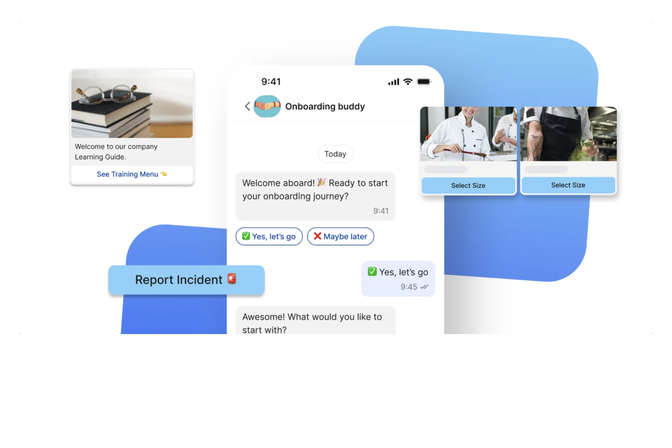
The intelligent agents of Flip Flows help your employees through each step of their journey.
How does Workforce Management Software help with compliance and cost control?
Labor laws are complex, vary by region, and change regularly. For organizations with employees spread across multiple locations and jurisdictions, staying compliant with working time regulations, rest period requirements, and documentation obligations is a substantial operational challenge. Manual compliance monitoring relies on managers knowing the rules and applying them correctly every time — a standard that is unrealistic at scale.
Workforce management software addresses compliance risks by embedding regulatory rules directly into scheduling and time tracking workflows. The system can prevent schedules that violate maximum working hours, flag missing rest periods, and alert managers when overtime thresholds are approaching. Every action is logged, creating the accurate records that labor law audits require. For HR departments, this shifts compliance from a reactive, anxiety-driven process to a proactive, system-supported one.
Compliance monitoring also connects directly to cost control. Organizations that fail to track working hours accurately face penalties, back-pay claims, and reputational damage. Automated compliance built into the workforce management system reduces this exposure significantly.
How much does Workforce Management Software cost?
The cost of workforce management software varies widely depending on the size of the organization, the number of modules required, and whether the solution is cloud-based or on-premise. Some providers charge per employee per month, while others use tiered pricing based on features. Enterprise-level solutions with deep integrations, advanced analytics, and dedicated support will sit at the higher end of the spectrum.
What matters more than the sticker price is the total cost of ownership compared to the cost of doing nothing. Manual processes, scheduling errors, payroll corrections, compliance penalties, and the management time spent on administrative tasks all carry a price. Organizations that evaluate workforce management solutions purely on license cost miss the larger picture. The right question is not "how much does this cost?" but "what does it cost us not to have this?".
When evaluating options, organizations should look for transparent pricing, the ability to start with core modules and expand over time, and seamless integration with existing systems. A platform that requires expensive middleware or custom development to connect with payroll systems or HR tools is likely to cost far more than it appears.
How to choose the right Workforce Management Software for Human Resources
Choosing workforce management software is a decision that will shape daily operations for years. The market includes everything from standalone scheduling tools to full human resources platforms. Finding the right fit depends on understanding what your organization actually needs.
Start with the workforce management functions that are most urgent. For many organizations, this is employee scheduling and time tracking. For others, it is absence management, compliance monitoring, or labor forecasting. A good WFM software provider will let you deploy the modules you need now and add capabilities later.
Integration matters as much as features. The platform must connect with your payroll systems, existing HR tools, and any operational software your teams already use. Integrated systems that share employee data across functions eliminate the duplication and errors that come from maintaining separate databases for scheduling, attendance, payroll, and document management.
Finally, consider who will actually use the software. Workforce management platforms that require desktop access exclude frontline workers. The best solutions are mobile-first, designed for employees who carry a phone but rarely sit at a computer. When employees can view schedules, track time, submit absence requests, and receive updates on mobile devices, adoption follows naturally.
Where Flip fits: Workforce Management Software built for Employee Engagement
Most workforce management solutions focus on operational control: schedules, timesheets, compliance. These are essential, but they address only half the challenge. The other half is the people doing the work. When employees feel disconnected, uninformed, or unsupported, no amount of scheduling optimization will fix the problems that follow such as high turnover, low morale, and the constant cost of re-hiring and re-training.
Flip approaches workforce management from a different starting point. As an AI-native frontline employee experience platform, Flip combines employee communication, HR workflows, and operational processes in a single mobile app. Employees can check schedules, submit absence requests, access payslips, complete onboarding tasks, and communicate with their teams, all without switching between tools. For HR departments and operations leaders, this means streamlined processes, better data accuracy, and the ability to manage HR tasks from one place rather than across half a dozen disconnected systems.
Flip's strength in the workforce management space comes from its integration capabilities. Through deep connections with systems like SAP SuccessFactors, Workday, and UKG, Flip serves as the employee-facing layer for core HR functions. This brings workforce management features to the people who need them, on the devices they already carry. Employee scheduling, time tracking, and absence entry happen within the same environment where employees read company news, access their digital assistant, and engage with colleagues.
This different approach matters because employee engagement and workforce management are not separate disciplines. Organizations that treat them as such end up with two sets of tools, two sources of employee data, and twice the administrative overhead. Flip eliminates this divide. By enabling employees to complete HR tasks, receive updates, and participate in their workplace through one platform, Flip improves employee engagement while also delivering the operational efficiency that workforce management demands.
For organizations evaluating workforce management solutions in 2026, the question is no longer whether to digitize scheduling and attendance. That decision has been made. The question is whether your platform also improves how employees experience their work every day. Flip is built to answer both.
The future of Workforce Management is already here
Workforce management software has moved well beyond scheduling spreadsheets and manual timesheets. The organizations pulling ahead in 2026 are the ones that have recognized what the data already shows: frontline workers are willing and capable, but the systems around them have been slow to catch up. The gap between what employees need and what most tools deliver is narrowing, but only for companies that are actively closing it.
The next generation of workforce management is less about adding more features. It is about making fewer tools do more. Integrated platforms that connect scheduling, time tracking, compliance, communication, and HR workflows in a single experience are no longer a vision of the future. They are a competitive requirement. Organizations that build this infrastructure now, and extend it through AI to automate routine tasks and surface smarter decisions, will not only run more efficient operations. They will build a workplace that frontline employees actually want to come back to.
Source: idealis, Frontline Workers Feel Valued at Work - but Left Behind on Benefits, New Study Shows.

Reach your operational teams 80% faster and more reliably
Flip's mobile app combines messaging, chat, HR tools, and your knowledge base in one secure application. No additional tools or licenses required.

Dr. Franzi Finkenstein
Dr. Franzi Finkenstein is part of the Content & Search team at Flip, writing about digital communication, employee engagement and AI–human connections. Drawing on a humanities PhD and extensive editorial experience, she focuses on how digital technology is reshaping the future of work and explores how employee health and wellbeing in modern workplaces can be improved.
Don’t forget to share this content

More on the topic of Employee Engagement

Employee app: 10 best tools for internal communication 2025

Essential Workforce Management Tools for Team Optimization

How AI agents will transform the frontline employee experience