92%
of U.S. construction firms report difficulty finding workers.
CONSTRUCTION & REAL ESTATE · 2026 PLAYBOOK
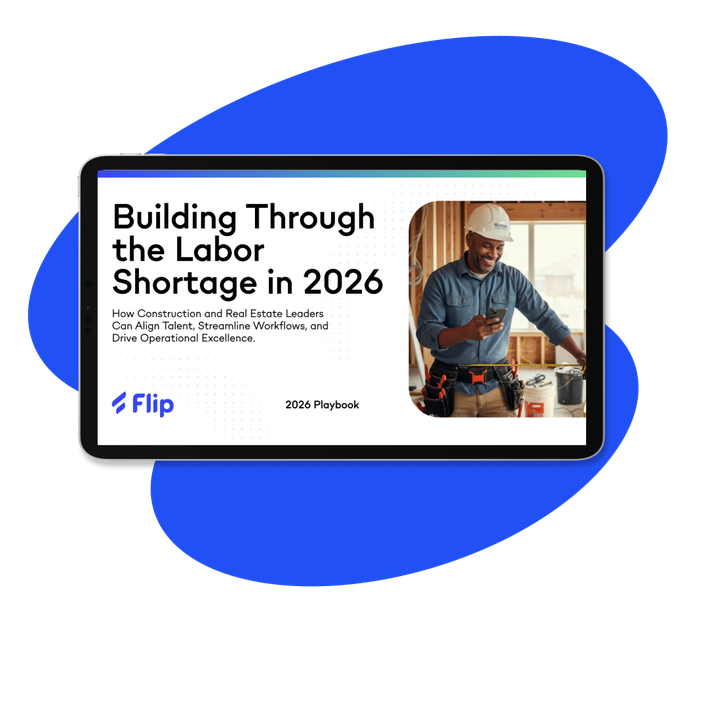
The U.S. construction industry needs 349,000 net new workers in 2026, while 92% of firms already report difficulty hiring according to recent studies. This free playbook shows construction and real estate leaders how to close the gap by digitizing the frontline workforce — using the CONNECT framework and the same approach West Shore Home used to scale across 2,000+ installers and 43 branches.
What you'll learn in this playbook:
The labor crisis: why shortages now stall project delivery — not just inflate payroll
Operational friction: how communication gaps and fragmented tools erode safety and productivity
The retirement wave: how to capture decades of expertise before your veterans retire
The CONNECT framework: a step-by-step model for digitizing your frontline workforce
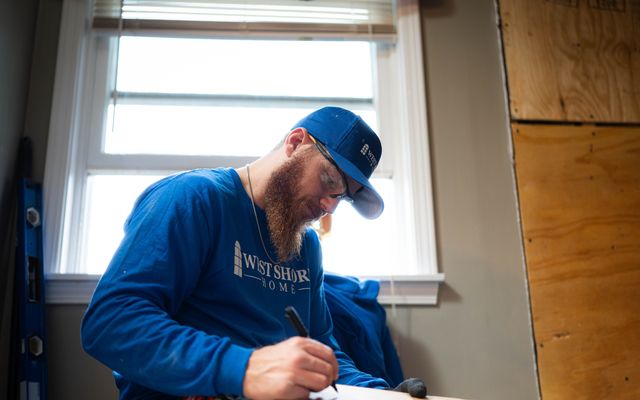
Real-world results: how West Shore Home transformed 2,000+ installers across 43 branches
Why this playbook matters now
In 2026, the U.S. construction industry faces a structural workforce gap, not a cyclical one. Demand for housing, data centers, and infrastructure is climbing, while a generation of skilled tradespeople is retiring out of the workforce.
Every resignation avoided is money saved. Every absence prevented protects a project timeline. Every veteran who stays long enough to mentor the next generation becomes a competitive advantage.
In a sector where margins are already wafer-thin, the operators winning aren't spending more — they're operating smarter, with mobile-first tools that connect every site, every crew, and every shift.

of U.S. construction firms report difficulty finding workers.
net new workers needed in 2026 alone to meet construction industry demand
of frontline employees feel disconnected from their head office when communication is fragmented.
Inside the playbook
Why are labor shortages a business risk, not just an HR challenge?
88% of contractors have open craft-worker positions they can't fill. Project timelines slip, overtime spikes, and your most experienced crews burn out covering for empty seats. Workforce capacity is now the gating factor on revenue, not demand.
How is the retirement wave quietly draining your bench?
Construction is one of the oldest workforces in the U.S. economy. 59% of operational know-how sits with veterans who are nearing retirement — and informal mentoring doesn't scale. Without a way to digitize that expertise, every retirement is a productivity loss.
How does fragmented communication bleed productivity on a job site?
Three WhatsApp groups, missed emails, paper manuals, and a site manager spending half the morning "syncing" people. Only when frontline crews are connected to one source of truth do safety updates land, schedules hold, and rework drops.
How is inconsistent onboarding slowing down ramp-up?
55% of frontline workers say their company has no formal onboarding process. 30% say their employer lacks the technology to support training. In an industry running on tight schedules, that gap shows up as slower time-to-productivity and avoidable safety incidents.
The playbook walks through Flip's CONNECT framework — Connect the workforce, Operationalize digital tools, Nurture skills and knowledge, Navigate generational change, Engage employees in daily work, Create workforce visibility through data, and Transform continuously. It's a practical model you can map directly onto the systems and people you already have.
West Shore Home Story
2,000+ installers across 43 branches

Bechtold Group Story
3,000 employees in one employee app
Book a demo
Flip is the frontline employee platform that construction and real estate businesses use to reach and rally their people. It instantly connects every employee with relevant news and knowledge and makes everyday tasks like shift planning and time tracking a breeze.
